

Aluminum
Building a Sustainable Future with Aluminum
Apr
Sustainable change doesn’t always require expensive new materials. Sometimes all you need is a simple switch, and sustainable aluminum is already available for reshaping industries. From interior design to construction, aluminum offers companies real opportunities to cut waste, lower emissions, and meet sustainability goals without sacrificing performance or profit.
As cities and neighborhoods continue to grow, there is an increased effort for construction of green, or sustainable, buildings. But why is this important? The continuous growth of our communities has a very real and harmful impact on the environment and natural world around us, from air quality to amount of landfill waste to the consumption of energy, water, and electricity. While it may feel as though these resources are unlimited, this is not actually the case.
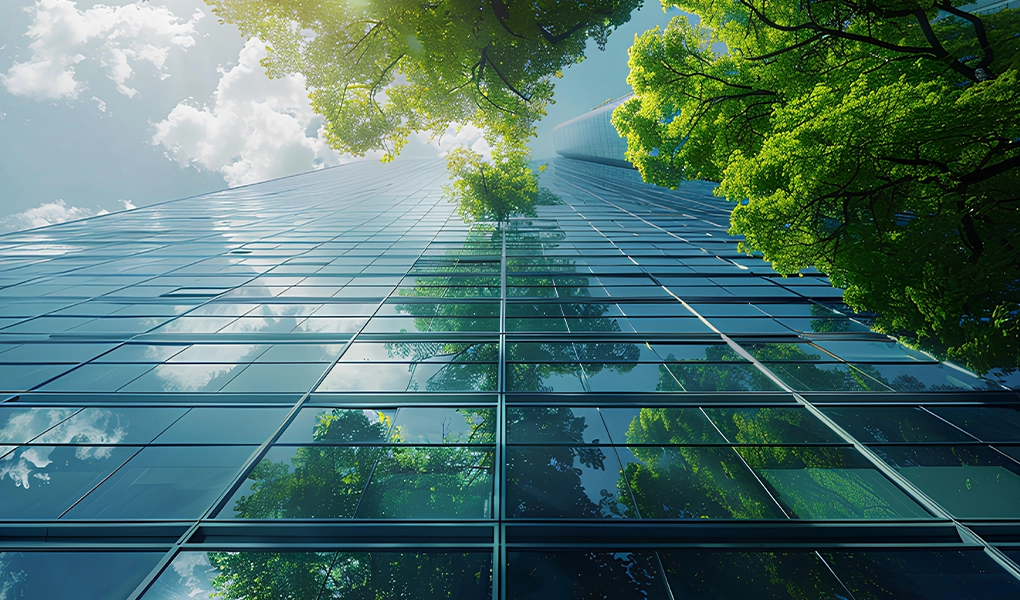
Creating sustainable architecture projects helps to reduce the number of resources used, thus better protecting the natural world around us without sacrificing quality of life. One material aiding in the process for a greener world is aluminum. Today, an increasing number of buildings are using aluminum extrusions in their design and construction. Read on to explore how building with aluminum contributes to sustainable architecture.
What are LEED Buildings?
When we talk about sustainable building, we usually hear the term LEED buildings. LEED stands for Leadership in Energy and Environment Design, as it is a widely used and accepted rating system for green buildings around the world. LEED was developed by the U.S. Green Building Council, and offers a framework for building design, construction, operations, and maintenance solutions that teams can use to create sustainable architecture projects that better incorporate cost-saving, healthy, and efficient measures.
Using the LEED system, buildings are scored based on performance in five key areas that include indoor environmental quality, materials and resources, water efficiency, sustainable sites, and energy and atmosphere. Based on the number of points received across these five areas, a building will be rated as Certified, Silver, Gold, or Platinum.
How Does Aluminum Help Make a Building Green?
Aluminum products can help builders earn LEED points in areas such as indoor environmental quality, materials and resources, and energy usage.
Aluminum Contributes to Healthier Interiors
Using aluminum extrusions for interior finishing applications such as wallcovering trims, corner protection and base plates results in a healthier indoor environment. According to the U.S. Green Building Council, aluminum is considered an “inherently non-emitting source of VOCs… and has no binders, surface coatings, or sealants that include organic chemicals” and passes Cal 01350 standard (LEED EQ 4.2). Aluminum is often chosen for HHI (Healthier Hospitals/ Healthy Interiors) compliance because it is not a plastic, does not contain intentionally added halogenated flame retardants, and is durable, often substituting for prohibited PVC or chemicals of concern.
Aluminum is “Cool”
A cool roof is one designed to reflect more sunlight and absorb less heat than a standard roof. Cool roofs are coated with a highly reflective type of paint or built from highly reflective materials. Aluminum is a great material for cool roofs because it can reflect close to 95% of solar energy that reaches it when properly coated. Reflecting solar energy decreases the need for energy-guzzling systems to regulate temperature within the building thereby increasing the building’s energy efficiency.
Aluminum is Easily Recycled
Aluminum contributes to sustainable building because it is easily recycled. Unlike many other metals, aluminum is 100% recyclable and can be used repeatedly without losing any of the properties that make it such great material to work with. The ability to maintain its quality despite repeated use is key when it comes to constructing sustainable architecture projects. Using recycled aluminum helps builders earn points in the Materials & Resources category by fulfilling requirements for recycled content and waste diversion. A project can earn up to 2 points towards its LEED rating by reaching 20% total recycled content for the entire project’s materials.
Aluminum is Corrosion-Resistant
Another characteristic of aluminum that makes it so green is that it is highly resistant to corrosion thanks to the naturally produced oxide coating this alloy creates. Unlike other materials that rust and degrade, aluminum does not require any paints or coatings. This means that despite adverse conditions, building owners will not have to conduct non-environmentally friendly repairs and disposals of no longer usable materials.
Contact Us Today
At Eagle Aluminum, we are committed to providing the materials needed for buildings to maximize sustainability and efficiency. If you’re considering an aluminum extrusion for the construction or renovation of a commercial building, contact us today to discuss your options and receive recommendations from seasoned experts to create an aluminum green building LEED certified to the appropriate standards.